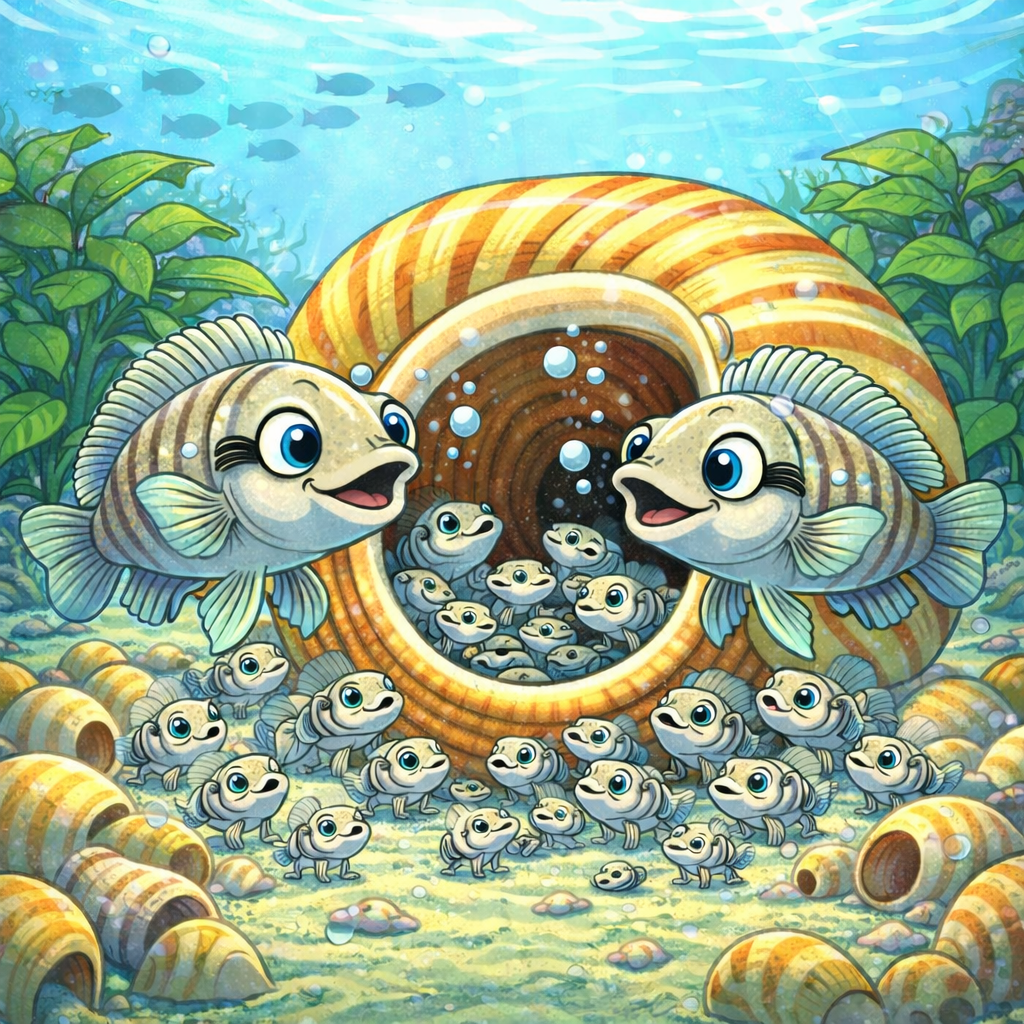
Tiny Shell Architects
Neolamprologus multifasciatus, often called Multies, may be small, but they live big lives. Native to the sandy bottoms of Lake Tanganyika, these shell-dwellers build entire communities around empty snail shells, turning the substrate into a constantly shifting neighborhood. Every shell matters, and each one tells a story of territory, family, and survival.
Spend time watching a group of Multies and you’ll quickly see how much personality is packed into such tiny fish. They dig, rearrange, defend, and communicate nonstop, creating a living landscape that changes day by day. Their world is close to the sand, but it’s full of movement, social structure, and surprisingly complex behavior that makes them endlessly fascinating to observe.
When given space to establish shell beds and interact naturally, Multies create one of the most engaging displays in the hobby. It’s not about size or bold color here, it’s about behavior, connection, and watching a miniature ecosystem unfold right before your eyes.
Care Profile
◦ Origin – Lake Tanganyika
◦ Temperament – Territorial
◦ Tank Size – 20 gallons or more
◦ Aquascape – Sand substrate with plenty of shells
◦ Diet – Omnivore (micro-predator)
◦ Breeding – Shell Dwellers (
Females lay eggs deep inside shells)
◦ Temperature – 75-80°
◦ Water Quality (ph) – 8.0 – 9.0
◦ Nitrates – ≤ 40ppm
Life Among the Roots
Though Multies environments are centered around sand and shells, select plants can still be incorporated with purpose. Submerged options like Bolbitis and Vallisneria thrive when placed along the tank’s perimeter or attached to hardscape, while emerged plants such as monstera, syngonium, spider plants, or lucky bamboo grow with their roots suspended in the water. Together, these plants support water quality, add natural structure, and enhance the ecosystem without disrupting the delicate shell-dwelling world below.
Did You Know?
Give Multis shells and stability, and they’ll do the rest, including multiplying faster than you might expect.